HCP Terraform for the Terraform Associate 004 Exam
Learn the HCP Terraform concepts that matter for Associate 004, including workspaces, projects, remote operations, variable sets, and governance.
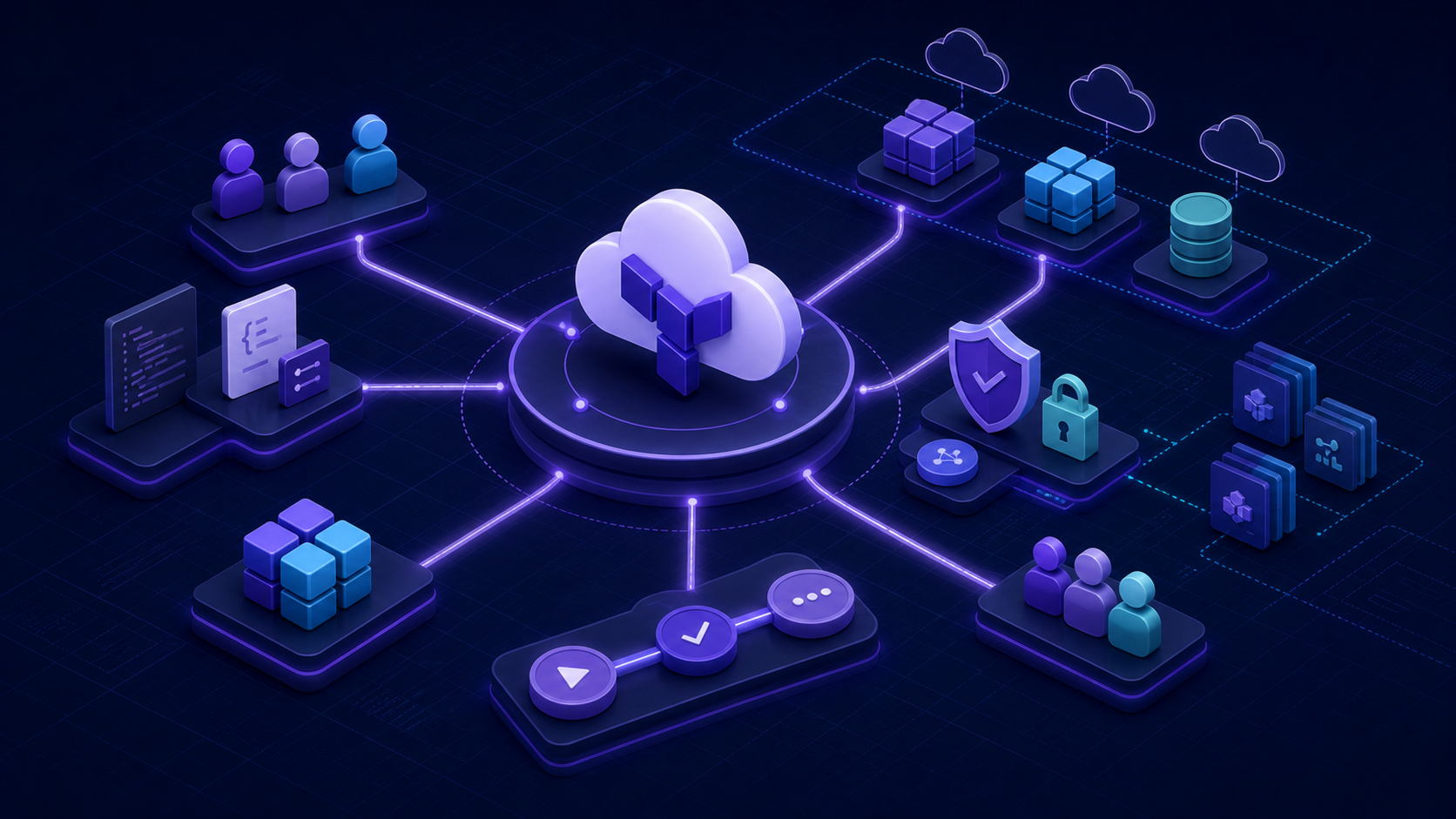
HCP Terraform is part of the current Terraform Associate 004 exam, which means Terraform study plans that ignore it are incomplete. Many candidates prepare heavily for CLI workflows, modules, and state, then realize late that HashiCorp also expects them to understand the collaboration and governance layer around Terraform in teams.
HashiCorp's current exam content list includes four HCP Terraform objectives: using HCP Terraform to create infrastructure, describing collaboration and governance features, organizing workspaces and projects, and configuring integrations. That tells you what to focus on: not every product detail, but the major concepts that explain why teams move beyond laptop-only execution. You can review the current official list on HashiCorp's Associate 004 content page.
What HCP Terraform changes compared with local-only workflows
Running Terraform locally works, but it has limits. Team workflows need shared execution, consistent access controls, centralized variables, and better visibility into what changed and who changed it. HCP Terraform addresses those problems by providing a managed platform for remote operations and collaboration.
If an exam question asks why an organization would use HCP Terraform instead of relying only on local CLI runs, think in terms of coordination, control, and repeatability.
Workspaces are the core unit
Workspaces organize Terraform runs and state for a given configuration or environment. They are the building block for HCP Terraform operations. Questions may describe separate environments, isolated state, or independently managed runs. In those cases, workspaces are usually central to the answer.
Projects help organize related workspaces
Projects provide a higher-level way to group workspaces. That makes them useful for teams that need cleaner structure across applications, environments, or business domains. For exam purposes, the key distinction is that projects help organize, while workspaces are where runs and state actually live.
Remote operations are more than convenience
Remote operations let Terraform runs happen in the platform instead of on one engineer's machine. That improves consistency and reduces dependence on a specific laptop or shell environment. It also aligns naturally with shared state, access control, and auditability.
This is one reason HCP Terraform pairs so well with the state-management concepts in our Terraform state article.
Governance and collaboration are exam-relevant
HashiCorp explicitly includes collaboration and governance in the objective list. At the associate level, that means you should be comfortable with the broad purpose of features such as team-oriented access, policy enforcement, variable sets, and structured workspace organization. You do not need deep platform administration knowledge, but you do need to understand what these features are for.
| Feature area | Why it matters |
|---|---|
| Workspaces | Separate runs, state, and execution context |
| Projects | Organize related workspaces at a higher level |
| Remote operations | Standardize execution away from individual laptops |
| Variable sets | Share values across multiple workspaces |
| Governance controls | Support policy and safer team workflows |
Integrations matter because Terraform rarely lives alone
The official objectives also mention configuring and using HCP Terraform integrations. You should expect questions that frame HCP Terraform as part of a larger delivery process rather than as an isolated tool. The important exam idea is that HCP Terraform can connect with broader team workflows, credentials, and automation patterns.
What HashiCorp says about the certification itself
HashiCorp's certification page currently lists Terraform Associate (004) as the associate-level Terraform certification. HashiCorp also states that certification exams are taken online with a live proctor, and that passing candidates receive a digital badge and downloadable certificate through Credly. Those details are useful context when you are preparing around the broader certification experience, not only the product content. See HashiCorp's certifications page for the current program details.
FAQ
Is HCP Terraform part of the current Terraform Associate exam?
Yes. The current Associate 004 objective list includes HCP Terraform topics around infrastructure creation, governance, workspaces, projects, and integrations.
What is the difference between a workspace and a project in HCP Terraform?
Workspaces are where runs and state are managed. Projects organize related workspaces into higher-level groups.
Why do remote operations matter?
They make execution more consistent and collaborative by moving runs into a managed shared platform instead of relying on one local machine.
Bottom line
HCP Terraform is the part of Associate 004 that pushes candidates from tool familiarity toward team-oriented Terraform practice. If you understand workspaces, projects, remote operations, shared variables, and governance at a high level, you are covering what the exam is actually trying to test.
If you want to confirm that these concepts are exam-ready, use the Terraform Associate practice tests. They are useful study material because they turn HCP Terraform ideas like workspaces, projects, remote runs, and governance into scenario-based decisions, which is the fastest way to tell whether you truly understand the operational tradeoffs instead of only recognizing the terminology.